

I still remember the exact moment I stopped trusting "Top 10 Street Food Cities" lists. It was 11 p.m. in Bangkok's Chinatown, and I was standing in front of a stall selling guay jub—rolled rice noodles in peppery broth—when a girl next to me, phone in hand, asked the vendor if this was "the famous one from TikTok." He didn't understand the question. She showed him the screen. He shrugged, ladled her a bowl anyway, and she took a photo without eating a single bite.
That's the problem with hunting for street food in Southeast Asia using city-level advice. "Bangkok is amazing for street food" tells you nothing. The real question is which market, which soi, which 4 p.m. window. I've spent the better part of six years eating my way through this region—sometimes brilliantly, sometimes with a stomachache that lasted three days—and I've learned that the difference between a great meal and a forgettable one is almost never the city. It's the specific market, the specific hour, and which direction the locals are walking.
So this is my working list. Not the most Instagrammable. The ones I keep going back to.
Key Takeaways
- City-level lists are useless; market-level detail is what actually gets you a good meal.
- The best markets are usually the ones with zero English signage and a single homogenous smell.
- Timing matters more than location. A great market at 8 a.m. is a different place at 3 p.m.
- Budget roughly $1–3 per dish in most of the region, but Singapore and parts of Malaysia break that rule.
- If a stall's menu has photos and prices in three currencies, keep walking.
Why most street food advice for Southeast Asia fails you
Here's the thing: street food is hyper-local by definition, and the internet flattens it into a national average. When someone says "Vietnamese street food," they're compressing a Hanoi breakfast stall, a Hue bun bo cart, and a Saigon late-night snail joint into one word. Those are not the same meal. They're not even the same cuisine, really.
I made this mistake early on. My first trip to Vietnam, I showed up in Hanoi expecting "Vietnamese food." What I got, on day one, was bun cha at a corner stall that only operated from 6 to 9 a.m., run by a woman who'd been doing it for thirty years and had exactly one item on offer. That's the real unit of street food: one stall, one dish, one narrow time window.
What "local" actually means
Everyone uses the word. Almost nobody defines it. For me, a market is genuinely local when three things are true at once: the customers are mostly people who live within walking distance; the prices are printed nowhere (you just know, or you ask); and there is at least one item on the menu you don't recognize and can't Google-translate on the spot.
Chatuchak Weekend Market in Bangkok, for all its fame, actually passes this test—but only in certain sections. The tourist core along the main walkways sells t-shirts and coconut ice cream. Walk twenty minutes deeper, past the plant section, and you hit the food stalls where Thai families are buying sai ua (Northern Thai sausage) and khanom by the bag. Same market. Two totally different places.
How to spot a tourist trap in ten seconds
I've got a mental checklist now, and it's saved me a lot of mediocre meals:
- Menus in four languages with laminated photos. Walk.
- A "recommended by" sticker from a foreign website. Walk.
- Nobody eating at 12:30 p.m. on a weekday. Something's wrong.
- One dish only, a line of locals, no seating. Sit down.
- The vendor ignores you for the first thirty seconds because they're busy. Good sign.
The single most reliable signal, honestly, is boredom. Great street food vendors look bored. They've made the same dish eight thousand times. If the person cooking is excited to see you, you're probably at the wrong stall.
The markets I actually return to, ranked by nothing
I'm not going to pretend there's an objective ranking here. What follows is a set of markets I've eaten at multiple times, in different seasons, and would go back to tomorrow if I could. I'll be honest about the ones that disappointed me too, because that's the useful part.
Chatuchak, Bangkok: still worth it, if you go early
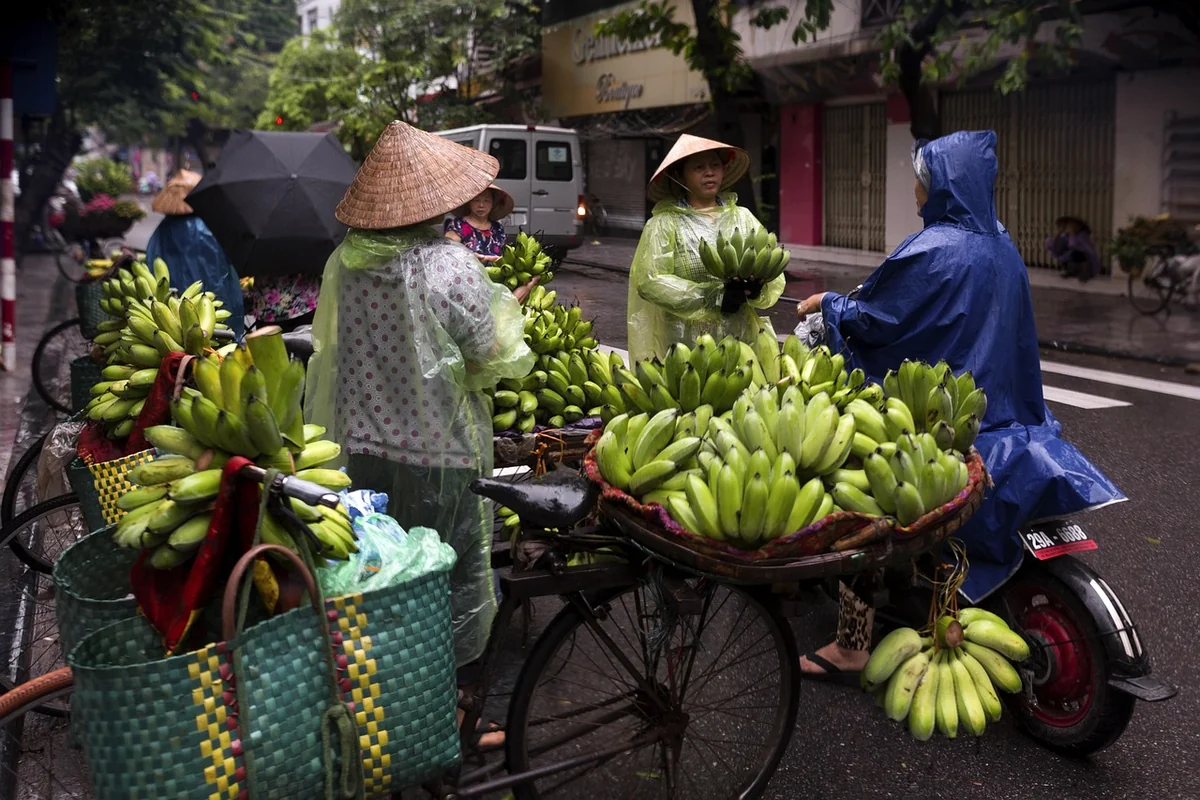
Everyone mentions Chatuchak. Almost nobody mentions that it opens at 6 a.m. for the food vendors (the general market opens later, around 9 a.m., Saturday and Sunday only). If you show up at 7 a.m., you eat breakfast with Thai families. If you show up at noon, you eat with tourists. Same market. I've done both. The 7 a.m. version is roughly ten times better and half the price.
What to eat: khao mok gai (Thai-Muslim chicken biryani), moo ping skewers, and whatever the old guy near section 26 is grilling. I have no idea what it is. It's incredible.
Hanoi's Dong Xuan area, not the market itself
Dong Xuan Market proper is a wholesale market that got mostly taken over by tourist stalls. Skip it. But the streets around it, particularly the alleys off Hang Chieu, are where I eat breakfast in Hanoi. There's a bun cha stall, a pho stall, and a woman selling banh cuon—steamed rice rolls—all within a hundred meters of each other, all open before 7 a.m., all closing by 9:30.
I'll admit: I spent two full mornings looking for the "best pho in Hanoi" and ended up eating at a place with no name, no sign, and a single plastic table. It was better than any of the named ones I tried. That's not a humblebrag. It's just how it works here.
Bogyoke Aung San Market area, Yangon
Myanmar is the market I'd tell people to visit before it changes too much. The food section around Bogyoke Aung San is more Burmese than tourist-facing, and the prices are the lowest of anywhere I've eaten in the region—I was paying around 1,000 kyat for a bowl of mohinga in 2019, which was well under a dollar. The catch is that Yangon has changed a lot since then, politically and economically, and I'd check current conditions before booking anything.
The timing rule nobody tells you
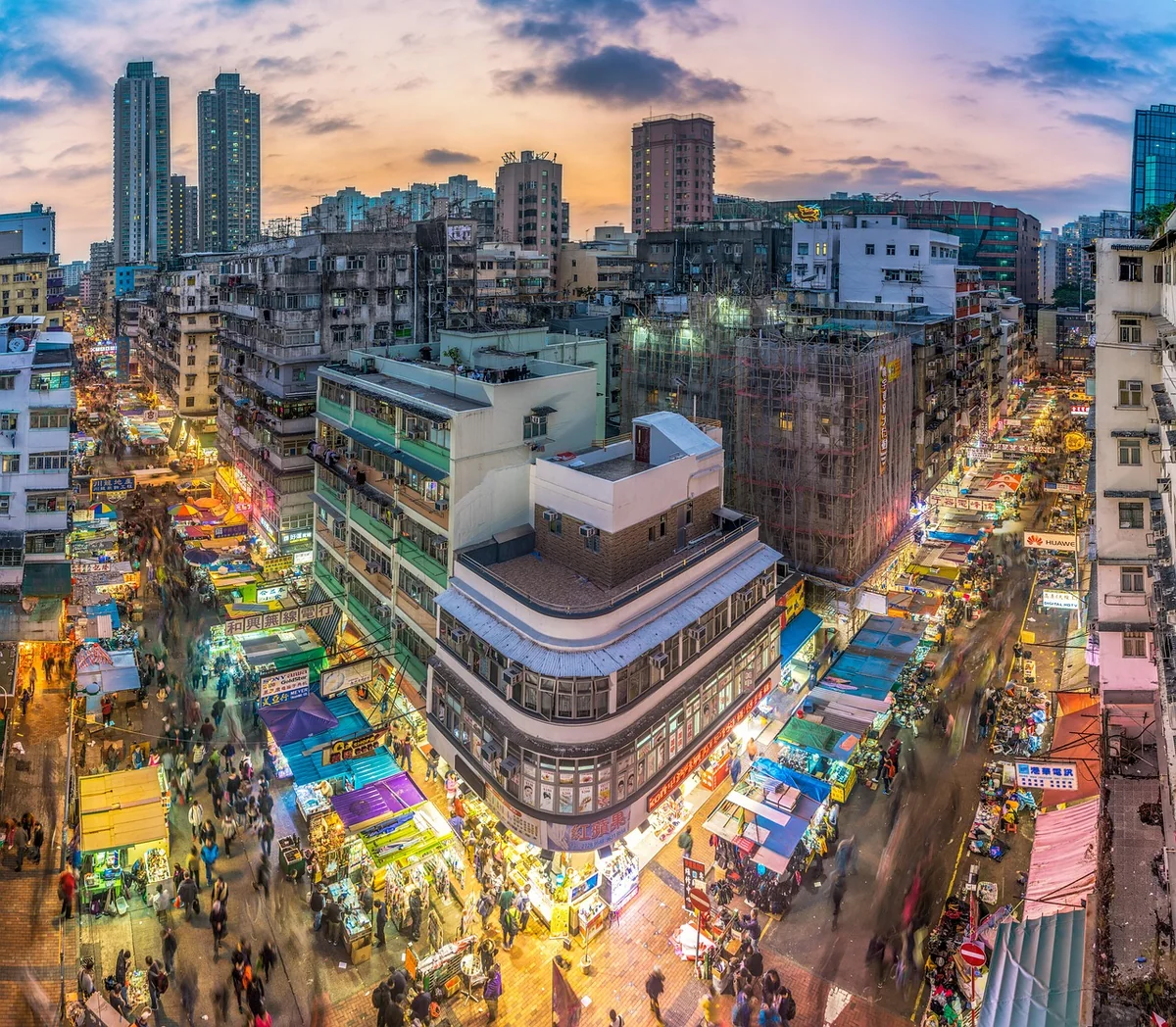
Markets don't have one personality. They have at least three, and they're basically different businesses.
| Time | Who's there | What's good |
|---|---|---|
| 6–8 a.m. | Locals commuting, workers | Breakfast dishes, soups, rice rolls |
| 11 a.m.–1 p.m. | Lunch crowd, mixed | Grilled meats, noodle bowls |
| 5–7 p.m. | Families, market closing | Last-minute produce, snacks, skewers |
| 7–11 p.m. | Night-market crowd, tourists | Fried everything, desserts, drinks |
I've had the same dish at the same stall taste totally different in the morning versus the evening, because the broth's been sitting out. Morning is almost always the answer. Night markets are fun but they're where the fried food and the tourists live, and the quality gap between the two is real.
What about rainy season?
Parts of Southeast Asia get seriously wet from roughly May to October, and it changes the market scene more than any guide tells you. In Thailand and Vietnam, the afternoon downpours will shut down open-air stalls for an hour or two. In Indonesia and Malaysia, the pattern is different—more scattered storms. If you're planning around food, aim for the cooler, drier months in each country: roughly November to February for most of mainland Southeast Asia. I once tried to eat my way through Hoi An in October. I spent most of the trip under an awning with wet shoes.
How much you should actually expect to pay
Vague "a few dollars" advice is annoying, so here's what I've paid, give or take, across a handful of countries. These are my own figures, and prices move, so treat them as ballpark.
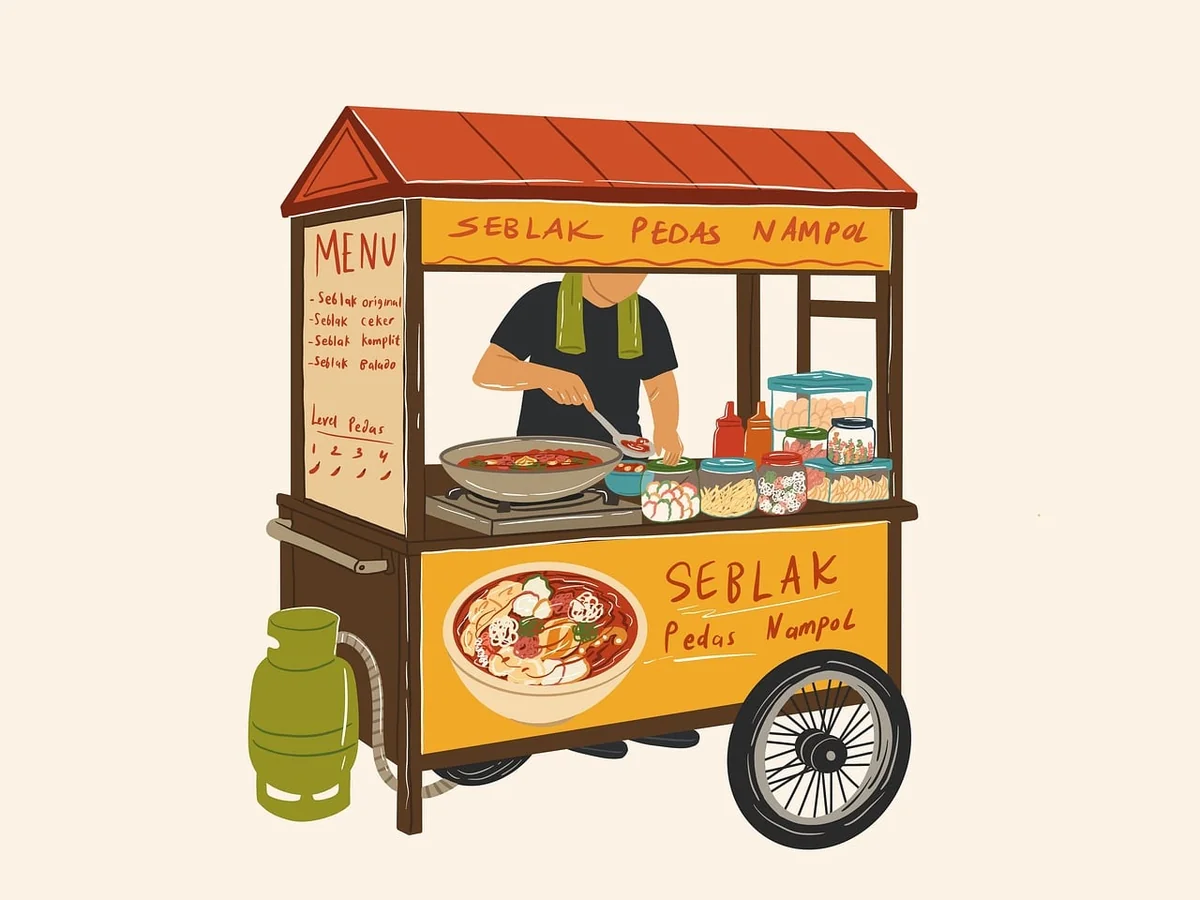
- Vietnam: 20,000–60,000 VND per dish (about $1–2.50).
- Thailand: 40–80 THB for most dishes ($1–2.30), more for seafood.
- Myanmar: very cheap historically; check current exchange conditions before you go.
- Malaysia: 3–8 MYR per item at hawker centers ($0.70–1.80).
- Singapore: 3–6 SGD at a hawker center ($2.30–4.50). The outlier.
Singapore is the one that breaks the pattern. It's still cheap by Western standards, but hawker food there is a structured, regulated, licensed thing—not the same loose, improvised street scene you find in Bangkok or Hanoi. Some people love that; it means less risk. I find it a little clinical, honestly, though the food itself is superb.
A note on getting sick, since nobody else will say it
You're going to get sick at least once. I've gotten sick on three separate trips, twice in the same country. It's not a moral failing and it's not a sign you ate at the "wrong" stall. It's a sign you ate something your gut flora had never met before.
What's helped me: eating at high-turnover stalls where the food is cooked in front of you and doesn't sit around. Drinking bottled or boiled water. Avoiding raw herbs that were just rinsed in tap water, which is honestly hard to do because they come on every plate. And bringing a basic kit—rehydration salts, an antidiarrheal, and a lot of patience.
Here's the thing most guides won't tell you: the risk isn't usually the meat. It's the water, the ice, and the raw vegetables. A stall with a screaming wok and a line of ten people is almost always safer than the quiet one with a nice-looking display.
The angle that actually matters
The reason people keep writing about street food markets in Southeast Asia, and the reason they keep getting it slightly wrong, is that the experience isn't really about the food. It's about being a stranger in someone else's morning. The bowl of noodles is the excuse.
So my honest advice: pick one market, go at 7 a.m., order whatever the person in front of you ordered, and don't take a photo until you've finished eating. Whatever market that is—Bangkok, Hanoi, Yangon, a random one you find on a side street in Penang—you'll get more out of that single meal than out of a month of hitting every spot on some list.
And if a vendor looks at you like you're slightly in the way? Good. You are. Eat fast, pay, and come back tomorrow.


