

You're standing on a corner in Bangkok's Silom district at 11:45 a.m., and you have two choices: the restaurant with the laminated menu and the touts outside, or the stall with no English, no photos, and fifteen office workers in line ahead of you. The locals are on their phones, waiting patiently for noodles that cost less than a bottle of water. That's your answer.
I learned this the hard way. My first trip to Southeast Asia, I ate three bland, overpriced meals in a row before I realized I was doing it all wrong. I'd been letting the tourist grid decide where I ate. Once I changed my approach, my food costs dropped by roughly 60% and my meals got roughly ten times better.
Finding authentic street food in popular tourist cities isn't about luck or insider connections. It's about reading the streets correctly—the same way you'd read a menu. This guide is the method I now use in every city I visit, from Mexico City to Hanoi.
Key Takeaways
- Follow the office workers, not the tour groups. A lunch crowd in business clothes is the single most reliable signal of quality.
- Skip stalls with monolingual tourist menus and touts. The best food is often sold without a single English word.
- Search maps in the local language and in residential neighborhoods, not on the monument axis.
- Eat where dishes are cooked to order in high volume—fresh turnover beats a quiet stall every time.
- The best cities for street food are chaotic, walkable night markets, not polished food halls.
Read the street before you read the menu
Most travelers make their decision at eye level: signs, colors, touts. The signals that actually matter sit at hip level and in the crowd itself. You're looking for signs that a stall serves people who eat there every day, not people who will never return.
The signals that actually matter
Walk a block or two away from the main tourist artery. Then look for these:
- A lunch rush of locals in work clothes. If office staff queue between noon and 1 p.m., the food is good and the turnover is fast.
- A menu in one language only—the local one. Photographs of the food and English translations usually signal a tourist buffer zone.
- Prices in local currency, displayed plainly. No "special tourist price." No tourist tax.
- Cooking visible and constant. A vendor who barely stops moving means steady demand; a vendor scrolling their phone is a warning.
The queue is not the whole story
A long line can be real demand or pure theater. On Khao San Road in Bangkok, I once watched a line of twenty tourists wait twenty minutes for crepes; forty meters away, three vendors sold the same batter for a third of the price to local kids on their way home from school. The line proved marketing, not flavor.
The rule I use: a queue is a green light only if the people in it look like they live within walking distance. If they're all holding the same guidebook, walk away.
How to search like a local, not a tourist
Before I land anywhere, I spend about twenty minutes doing one thing: mapping the food by the people who eat it. This is the part travel guides skip, and it changes everything.
Search in the local language
Open a map app and type "street food" in English, and you'll get a curated list of the same six places every visitor finds. Type it in the local language—or the name of a specific dish—and the map fills with different pins. A stall with 300 reviews in Thai and a 4.6 rating tells you something an English-language review never will.
I'll admit: I used to think translating search terms was overkill. Then in Mexico City, I searched for tacos de suadero instead of "tacos," and found a six-stool stand that opened at 8 p.m. in a residential street. It's still the best meal of my life, and I'd never have found it otherwise.
Search neighborhoods, not monuments
Monument-adjacent food is priced for people who'll never come back. Skip the area within a few blocks of the main attraction and head for residential districts or office blocks. The difference in price is dramatic and the difference in flavor is larger.
On a recent trip to Vietnam, I ate a bowl of pho near Hoan Kiem Lake for roughly triple what I paid two streets west in an alley full of Vespa scooters. The alley version had no English sign. It also had better broth, fresher herbs, and a local man telling me I was holding my chopsticks wrong. Good trade.
What city has the best street food in the world?
There's no single answer, but if you want a shortlist of cities most often named as street-food capitals, Bangkok, Mexico City, Hanoi, Singapore, and Istanbul top nearly every list I've seen. Bangkok and Mexico City are the two that come up most consistently among seasoned travelers, and for good reason: both have dense, walkable, working-class street-food cultures that survived mass tourism because locals eat there first.
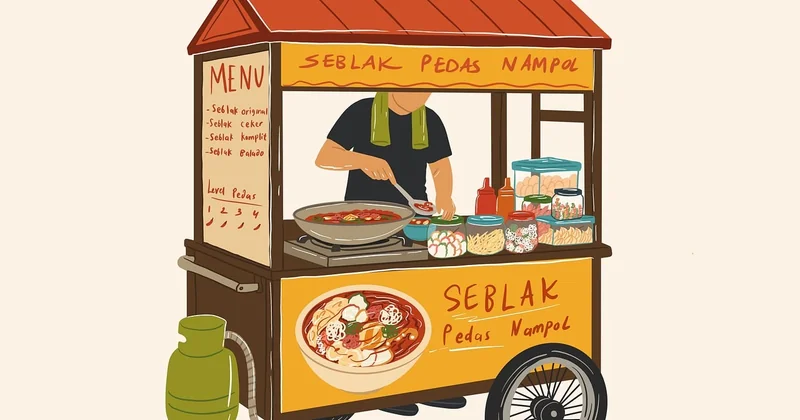
My own pick is Bangkok. The sheer density—noodles, curries, grilled skewers, and tropical fruit within a few blocks—is hard to match anywhere else. But "best" depends on what you value: Mexico City wins on tacos and late-night energy; Hanoi wins on broth and balance; Istanbul wins on grilled meat and breakfast culture.
Which city is most famous for street food?
In my experience, Bangkok takes the crown of fame. Ask almost anyone to name a city for street food and you'll hear Bangkok first. Its reputation is earned: street stalls are woven into the city's daily rhythm, not staged for visitors. Singapore's hawker centers are famous too, but they're a different creature—air-conditioned, organized, and closer to a public canteen than a roadside stall.
What not to-eat in Thailand as a tourist?
The honest answer: the risky items are usually not the ones tourists fear. Skip raw freshwater fish dishes, uncooked blood-based soups, and any fruit you can't peel yourself at a roadside stall. And avoid anything sitting out at lukewarm temperature for hours without a visible cooking line.
Most street food is fine—hot, freshly cooked, and served immediately. The bigger risk is a stall that looks like it's been waiting for you all afternoon rather than cooking for locals all day. Fresh turnover is your friend.
A little briefing helps
Before you eat, watch the vendor handle a few orders. Are they using clean utensils for different dishes? Is the cooking surface wiped between batches? Those observations tell you more than any online warning. And If you have a sensitive stomach, build up over a couple of days rather than starting with the spiciest, most fermented dish on day one—I made that mistake once, and later regretted it.
Is there a street food capital of the world?
There's no official title, but if you're asking where street eating is most intense and most woven into daily life, Bangkok and Mexico City are the two most convincing candidates. Both feed their own populations first, and both have districts where a vendor prepares food to order for hours on end, every day, for people who won't be tourists tomorrow.
My test for the title
I use a simple test: does the city's street food scene run on locals or on visitors? A place where office workers buy lunch from the same cart for years is the real deal. A place where the menu only makes sense to tourists is theater. By that measure, both cities are genuine, and Bangkok's sheer scale tips it for me.
Quick comparison: finding food city by city
Every city has its own signs. Here's the shorthand version I now use when I land:
| City | Where to go | Signal to look for | Watch out for |
|---|---|---|---|
| Bangkok | Silom and residential alleys off major roads | Office workers at noon; cooking to order | Mains near Khao San Road prices |
| Mexico City | Residential streets away from Zócalo | Evening-only stands; locals on plastic stools | Places that only reheat and serve |
| Hanoi | Alley pho shops and blocks near markets | One-dish menus, visible broth pots | Tourist-set menus with English everywhere |
| Istanbul | Grill streets and neighborhood markets | Constant grilling; workmen eating | Empty displays kept warm too long |
Dealing with language and hygiene
Two worries stop most travelers: they can't speak the language, and they're not sure the food is safe. Both have simple fixes that don't require you to learn a new alphabet.
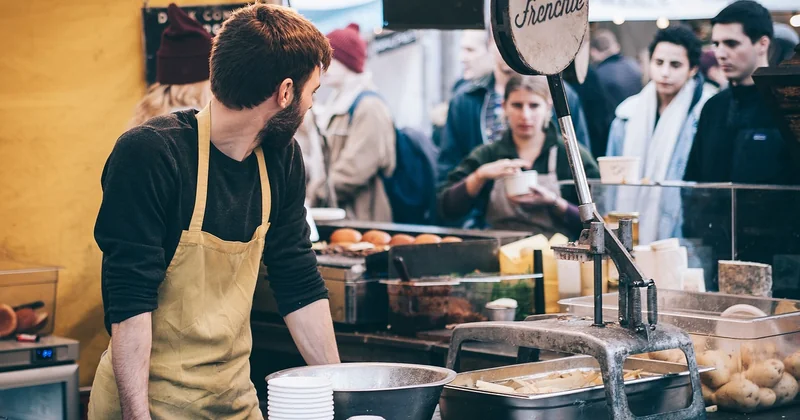
The language barrier
Point at what a local is eating, hold up fingers for quantity, and show the price on your phone. That's usually enough. Memorize "the same" and "how much" in the local language and you'll be fine. I carry a screenshot of common dishes with photos—it has never failed me.
The hygiene check
Look for food cooked hot and served immediately, a vendor wearing gloves or using tongs where it matters, and a clean work surface. A busy stall moves food so quickly it never sits. That's not a guarantee, but it's the best practical guide I've found. If your gut says no, trust it and walk a block further.
The method that actually works
Authentic street food isn't hidden from you—it's just not looking for you. Follow the locals, search in their language, and let fresh turnover and clear prices do the talking. On my worst trips I ate where the tours stopped; on my best I stood at a cart with no sign, eating what the person ahead of me ordered.
The food you'll remember didn't get a single review in your language, and that's precisely why it was good.


