

Somewhere in western Kansas, around mile marker 140 on I-70, there is a stretch of highway so flat and so straight that your car's cruise control will hold the same speed for forty minutes without you touching a thing. I know because I drove it, alone, at 6 a.m., with a cold coffee going lukewarm in the cupholder and absolutely no one to talk to. It was the best part of the trip. It was also the part where I nearly fell asleep at the wheel, because monotony is the real enemy of the solo driver, not distance.
Learning how to prepare for a solo road trip across the United States isn't really about packing lists. You can find those anywhere. It's about engineering the trip so that your energy, your safety, and your attention survive 2,000 to 3,000 miles of highway. I've done three multi-state solo drives now, and I've made almost every mistake available: driving past midnight, skipping meals, booking motels sight unseen. Here's what actually matters.
Key takeaways
- The 3-3-3 rule is a comfort tool, not a law: roughly three hours of driving, stopping every three hours, arrive by 3 p.m. It works because it protects your attention.
- Vehicle prep matters more than route prep. A breakdown with no copilot is a completely different problem than a breakdown with one.
- Fatigue management is a technical skill: fixed sleep windows, hard stop times, and no driving after dark unless you planned for it.
- Safety in the US is less about "dangerous states" and more about specific situations: empty rest stops, rural roads at night, and parking lots.
- Administrative prep (insurance, coverage, documents) is boring and is the single biggest gap in most guides.
What the 3-3-3 rule for road trips actually means
The 3-3-3 rule is a simple rhythm some drivers use to keep a road trip sane: drive roughly three hours, take a stop every three hours, and be at your destination by 3 p.m. It's not an official standard, no authority enforces it, and long-haul truckers would laugh at it. But as a solo traveler, it solves a very specific problem.
Why the rule works when you're the only driver
With a copilot, you split the driving and the boredom. Alone, you do both, and the second one is what gets you. A three-hour leg is long enough to make real progress and short enough that you're never pushing through a wall of exhaustion. Arriving by mid-afternoon gives you daylight to find your lodging, eat something, and walk around — which is what you actually came for.
I ignored this on my second trip and drove from Flagstaff into New Mexico after dark. I arrived at a motel around 11 p.m., couldn't find the office, and ate gas-station pretzels for dinner. The next day was a write-off: I lost about 200 miles of actual enjoyment to a schedule I'd invented for no reason.
Adapting it to real highways
The rule is a target, not a cage. In the wide-open West, three hours can be 200 miles; in the Northeast, it can be 120. What matters is the principle underneath: set a limit before your body sets one for you.
- Fixed departure time. I leave between 7 and 8 a.m. — late enough to wake up, early enough to bank the miles.
- Hard stop time. Mine is 6 p.m. After that, I'm not driving. Period.
- One long stop, not five short ones. A proper 30-minute stop with food and walking does more than three gas-station pauses.
- Plan the last night's lodging. Never wing the final stop.
Preparing the car is more important than preparing the itinerary
A breakdown alone is a logistical and emotional event. A breakdown with a passenger is an inconvenience. That distinction should reorganize your entire prep list.
The mechanical checklist
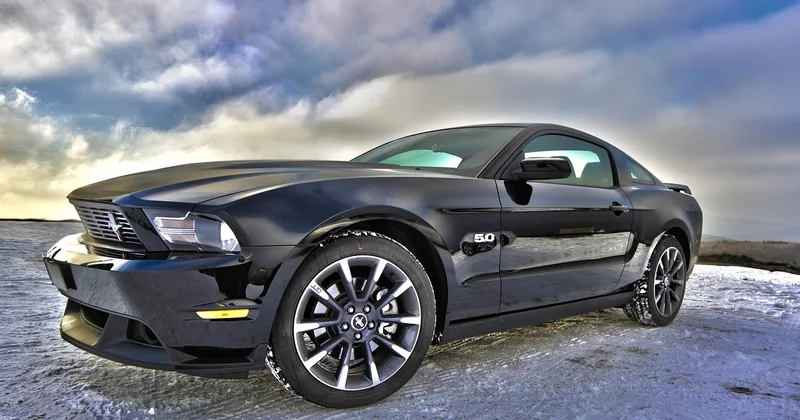
Before departure, get the oil and fluids checked, tires rotated and properly inflated (pressure changes with altitude and temperature — check it cold, at the start of the day), brakes inspected, and battery tested. If your car is over 100,000 miles, have a mechanic do a pre-trip inspection and tell them explicitly you're driving long distance solo. They will find things a routine service won't.
Carry a real spare and know how to change it. Not "I think there's a jack somewhere." Actually practice it once, in your driveway, in daylight. The first time I tried, on a shoulder outside Boise, I discovered my lug wrench didn't match the nuts. Twenty minutes of frustration I could have avoided with one test at home.
The emergency kit that's actually worth the trunk space
- Jumper cables or a portable jump starter (worth every dollar — the lithium ones fit in a glovebox)
- A case of water and shelf-stable food
- Headlamp, reflective vest, and a warning triangle
- Printed paper map of the states you're crossing
- A physical list of your insurance and roadside-assistance numbers, taped inside the glovebox
How to survive a long road trip by yourself without wrecking your body
Most guides say "take breaks." Thanks. The real question is what a break has to accomplish. And the honest answer is that a break only resets you if it does three things: gets you out of the seat, gets your blood moving, and stops the sensory monotony.
The physiology nobody mentions
Highway driving is a low-stimulation task, and low stimulation is what makes you drowsy. The famous advice about rolling down the window or turning up the radio doesn't fix anything — those are micro-stimuli that fade in minutes. What works: 20 minutes of actual walking, in daylight, every two to three hours. That's it. That's the trick.
I also stop driving when I catch myself doing the thing where I "come to" and don't remember the last ten miles. That's not a warning sign. That's an alarm.
The mental side of driving alone
Boredom is underrated as a hazard. Podcaster fatigue is real — after about four hours of talking, even a great show becomes background noise. I alternate formats deliberately: a podcast for the first leg, an audiobook for the second, music plus silence for the third. Silence, weirdly, is the most restorative of the three.
And here's the thing nobody tells you: you need to plan for the good days too. The temptation to push "just one more hour" when the road is beautiful and the weather is perfect is enormous. That's how you end up doing 14 hours and hating the next morning. The schedule exists because you can't trust the version of yourself that's having a good time.
What to do on a long car ride by yourself
If you're asking because you're genuinely worried about being bored, don't be. The list is short and mostly obvious, but the order matters:
- Download audio content offline before you leave — streaming gaps in rural areas are real.
- Keep a running voice-memo journal. It's a strange, surprisingly effective way to process the trip.
- Plan three "sight" stops per route segment, even if two of them are just a scenic overlook and a diner.
- Save a few things for the last leg — a show you've been putting off, a playlist you haven't heard yet.
Safety, state by state, and specifically for women traveling alone
Which US state is the safest for a woman to travel alone?
There is no single "safest" state, and any article that names one with confidence is guessing. What you can do is reason about it sensibly. States with lower overall violent-crime rates, smaller rural populations with long stretches of empty road, and reasonable cell coverage tend to produce fewer stressful situations for a solo traveler. New England states generally come up in these conversations, and so do parts of the Upper Midwest — but the honest framing is that your specific itinerary matters more than the state name on the license plate.

What actually changed my experience on a solo drive was situational, not geographic:
- I stopped using rest areas after dark. Always a lit gas station instead.
- I booked lodging with on-site parking and a staffed front desk, not a self-check-in code.
- I texted one person my route and my ETAs, every morning.
- I never told a stranger where I was staying or that I was traveling alone.
The gender point is uncomfortable but real: your threat model isn't the same as a man's, and pretending otherwise is not helpful. The practical answer isn't fear — it's reducing the number of situations where you're isolated and unobserved. That's a logistics problem, and you can solve it in advance.
What are the 10 riskiest countries for solo travel?
This question sits outside the scope of a US road trip, but it comes up whenever people discuss solo travel safety, so here's the honest answer: there is no objective, stable top-10 list. Risk rankings shift with conflict, policy changes, and reporting quality, and any list you find will be outdated within a year. What does translate from that conversation to your American road trip is the underlying method: check current travel advisories, avoid regions with active conflict or instability, and know that the biggest risks for a solo traveler anywhere are road safety, alcohol-related situations, and isolation — not dramatic crimes. Road safety is the leading cause of serious injury for travelers almost everywhere, and that's directly relevant when you're about to drive 2,500 miles.
Budget, insurance, and the boring paperwork that saves you
On a solo trip, a surprise bill is not a shared annoyance — it's entirely yours. Three things to sort out before you leave:
| Item | What to check | Why it matters solo |
|---|---|---|
| Auto insurance | Roadside assistance on your policy; coverage limits for rental cars if you swap vehicles | A tow on a rural interstate can cost several hundred dollars out of pocket |
| Health coverage | Whether your plan works across state lines; whether you have travel medical coverage | Out-of-network bills in another state are the classic hidden cost |
| Documents | Physical copies of insurance cards, license, registration; a photo of each | You have no second person holding the paperwork |
| Cash | Around $200 in small bills | Small rural businesses and tolls still surprise people |
Budget-wise, I plan on roughly $150 a day for a mid-range solo trip — motels around $80 to $110, food around $35, fuel and incidentals making up the rest. Fuel costs depend enormously on your car and the region, but a general rule of thumb is that a 3,000-mile trip in a mid-size car will run you somewhere in the $250 to $400 range at current prices, depending on where you fill up.
The part nobody plans for: being alone with yourself
Around day four of my first solo drive, somewhere in Utah, I had a small existential moment at a gas station. It was 4 p.m., the light was extraordinary, the road ahead was empty, and there was no one to say "look at that" to. That's the actual texture of solo travel. It's not lonely exactly. It's more like a lot of room.
You can plan for it or you can be ambushed by it. I plan for it now: I schedule one call with a friend every evening, I keep a short list of places I want to send photos to someone, and I don't try to fill every silent hour with content. Some of the drive is supposed to be just driving.
So here's the last thing. When you're standing in a parking lot in Kansas with a cold coffee and 900 miles behind you, the question that decides the whole trip isn't "did I pack the right things." It's "did I build a schedule I could actually keep." Everything else — the kit, the budget, the route — is downstream of that. Build the schedule first. The road will do the rest.


